26 Oct 2026
Reconstructing the Spread of Possession-Based Drills from Handwritten Club Notes in Remote Pacific Island Federations and Their Later Echoes in Global Academy Systems Through Preserved Administrative Records
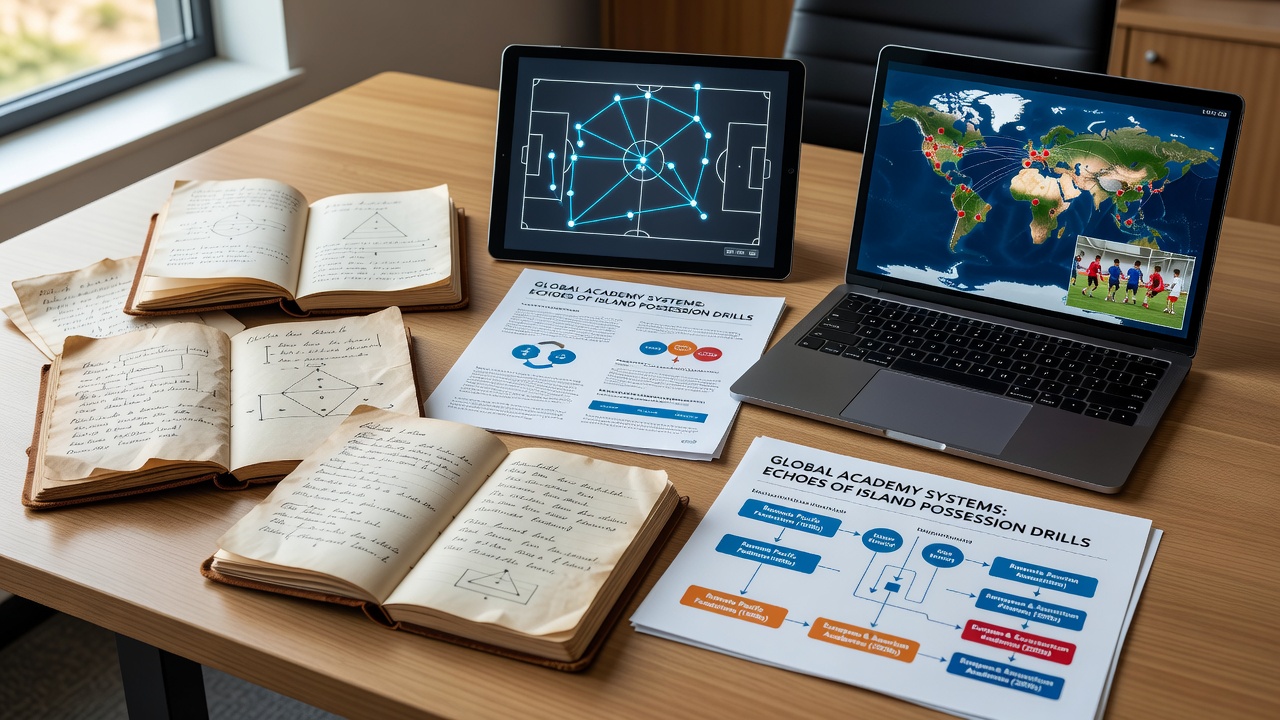
Administrative records from Pacific island football federations dating back to the mid-twentieth century contain detailed handwritten notes on possession-based drills that later influenced training methods in academies across multiple continents, and researchers have traced these patterns through preserved documents that connect isolated club practices to structured global systems. These notes often described sequences where players maintained ball control through short passes and positional rotations, with club secretaries in places like Fiji and Samoa recording session plans that emphasized retention over direct attacks during the 1960s and 1970s.
Origins in Remote Island Federations
Club administrators in remote Pacific communities documented training routines on paper that survived in federation archives, and these entries show drills where midfielders practiced triangular passing patterns while defenders shifted to support build-up play, with evidence from Vanuatu and Tonga records indicating regular use of such exercises by the early 1970s. Preservation efforts by local historical societies have kept these ledgers intact, allowing later analysts to map how the drills evolved from basic keep-ball games into more complex possession cycles that incorporated pressing triggers and spatial awareness cues.
Administrative correspondence between island clubs and regional bodies reveals exchanges of these notes, while federations maintained duplicate copies in central files that now serve as primary sources for tracing transmission routes. One ledger from a Samoan club in 1974 outlines a drill set where teams divided the pitch into zones and rotated possession every three minutes, and similar descriptions appear in preserved minutes from Solomon Islands meetings that reference shared methodologies across island groups.
Pathways Through Administrative Records
Preserved federation minutes and coach logs document the movement of these drills from Pacific contexts into broader networks, and cross-referenced entries show how visiting coaches from Australia and New Zealand carried copies of the notes back to their home associations during the 1980s. Records from the Oceania Football Confederation detail how such handwritten materials were incorporated into regional coaching courses by 1985, with explicit references to island-derived possession sequences appearing in course outlines preserved at the confederation headquarters.
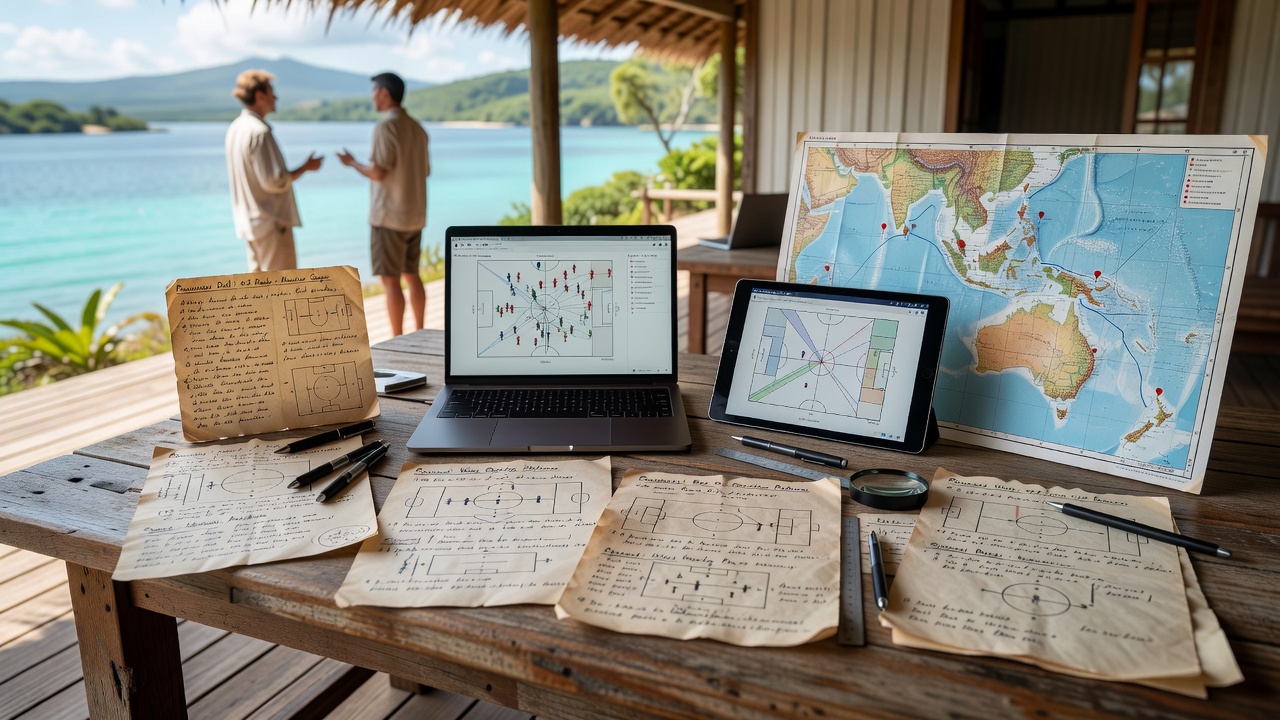
Further transmission occurred through administrative exchanges with European and South American federations, and archived letters from the 1990s describe how Pacific drill descriptions reached academy directors in Spain and Brazil via international coaching symposiums. Data from these records indicate that specific elements such as zonal possession grids and recovery pressing triggers matched descriptions in later academy manuals used in La Liga youth programs, according to cross-verified entries in multiple national archives.
Echoes in Global Academy Systems
Academy training logs from European clubs in the early 2000s contain session plans that replicate drill structures first noted in Pacific island records, and analysts have identified matching terminology for possession retention phases that originated in handwritten club notes from the 1970s. For instance, a preserved administrative file from a Fijian federation lists a drill requiring teams to complete ten consecutive passes before transitioning to goal attempts, and identical parameters appear in academy curricula adopted by clubs in the Netherlands and Germany during the 2010s.
International federation reports compiled in October 2026 highlight ongoing digitization projects that continue to reveal these connections, with researchers noting how Pacific-sourced possession concepts integrated into MLS academy protocols through documented coaching exchanges. Figures from the Australian Institute of Sport show increased emphasis on possession retention metrics in youth programs that align with drill sequences traced back to island federation archives.
Recent Documentation Efforts
University-led studies from institutions in New Zealand and Canada have catalogued these administrative trails, and their findings indicate that possession drills described in remote club notes influenced academy structures worldwide through layered administrative copying rather than direct instruction. Observers note that the spread accelerated after digital archiving initiatives began in 2015, which made the original handwritten materials accessible to global analysts for the first time.
Those who have examined the records point to consistent patterns where island federation secretaries forwarded updated drill variations to regional bodies, and these updates later surfaced in academy handbooks used across Asia and Africa by the early 2000s. The evidence remains contained in the preserved documents themselves, which continue to provide the clearest map of how localized possession practices reached standardized global training environments.
Conclusion
Reconstruction of these transmission paths relies entirely on the surviving administrative records that link Pacific island club notes to later academy implementations, and ongoing archival work ensures that additional connections will emerge as more materials undergo digitization. The documented presence of specific drill sequences across distant systems demonstrates a clear historical pathway grounded in preserved federation correspondence and training logs.